
From Washington Post: Preach What You Plan to Practice
"The most effective way to get people to change their behavior revolves around the clever use of . . . hypocrisy. When people feel not only that they are failing themselves but also that are failing to live up to what they tell other people to do, they change their behavior -- and stick to it."
Tuesday, January 6, 2009

Friday, January 2, 2009
Time- how humans construct it vs. time- how nature made it
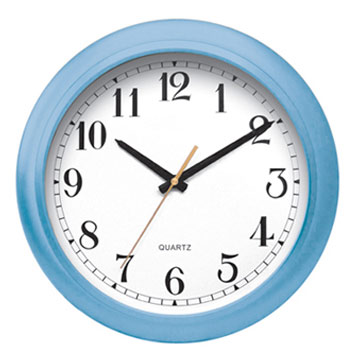
'The New Republic' book review on Rhythms of Life: The Biological Clocks that Control the Daily Lives of Every Living Thing by Russell G. Foster and Leon Kreitzman.
"In their wonderful book, Russell G. Foster and Leon Kreitzman tell us that while our ability to measure time has improved over the ages, we have nevertheless "been steadily losing a battle with time. Instead of controlling our modern clocks, they control us." Think about it: when we want to know when it is time to eat, or to go to bed, or to plan a vacation, we look at watches and clocks and calendars. Increasingly, these tools become dictators. But consider nature for a moment: without a Rolex or even a Swatch, the monarch butterfly knows to migrate from North America to Central America at precisely the same time each year. With no calendar and no alarm clock, the cicada emerges from the ground after exactly thirteen or seventeen years for a few fleeting weeks of frenzied mating--and the squirrel knows where and when to return to each and every one of its buried stashes of perishable goodies precisely before they lose their value and must be abandoned like surplus cottage cheese in the grocery. Bears hibernate, swallows rise to catch the early worm, and even plants seem as if they are silently counting the hours. This last fact has been known for some time: Linnaeus suggested back in 1751 that two species of daisy, the hawk's-beard and the hawkbit, be planted in a circle, since each opens and closes within precisely half an hour of the other, creating the hands of a floral clock."
Monday, December 8, 2008
Luxe is losing its edge

This is from an article in IHT:
Since the 1990s, sales of luxury goods have exploded, along with the growth of a well-heeled new global elite, turning once little-known European brands into giants and transforming chic addresses like Fifth Avenue, Bond Street and the Champs-Élysées into veritable open-air malls for the upper middle class.
Now, reality has caught up with Bulgari and the rest of the industry. Sales at the 125-year-old jeweler rose an anemic 2 percent in the third quarter. Analysts are pessimistic about a recovery in its current fourth quarter, a period that is responsible for an outsize portion of the company's annual results. And demand for luxury goods is expected to drop by 3 to 7 percent next year, according to a recent study by Bain & Company, the first time the sector has recorded an annual sales decrease since Bain began tracking it in the early 1990s.
"Past slowdowns were more regional in nature and people could perceive the end game," Angela Ahrendts, Burberry's chief executive, said in an interview. "This is global. We were with an investor last week who has had to rerun his worst-case scenario five times in the last five months, and we're still not there yet."
Perfume Ingredients: Cat faeces and Whale vomit?

Obviously I have been surfing the guardian website as I found this one on perfume just after the one about theatre critics.
"Many of perfumery's most venerable creations owe their sensuality to the use of animal ingredients with a certain "spray" element: civet, a faecal paste extracted from the anal glands of the civet cat; castoreum, a leathery emission from the genital scent sacs of the castor beaver; ambergris, a briny and vomitous by-product of the digestive system of sperm whales; and musk secreted from the sheath gland of the musk deer have all been popular perfume ingredients. Then things become still more complex: civet may be cut with hair or - brace yourself - infant excrement."
Baby poo in your perfume?
Theatre critics vs bloggers
There's a guardian posting on the possible irrelevancy of critics with the rise of the internet:
"Classical music and dance critics have been declared surplus to requirements on several papers"
"Classical music and dance critics have been declared surplus to requirements on several papers"
Saturday, December 6, 2008
Strangers May Cheer You Up, Study Says

This is from nytimes, article by Pam Belluck
How happy you are may depend on how happy your friends’ friends’ friends are, even if you don’t know them at all. And a cheery next-door neighbor has more effect on your happiness than your spouse’s mood. So says a new study that followed a large group of people for 20 years — happiness is more contagious than previously thought.
“Your happiness depends not just on your choices and actions, but also on the choices and actions of people you don’t even know who are one, two and three degrees removed from you,” said Dr. Nicholas A. Christakis, a physician and social scientist at Harvard Medical School and an author of the study, to be published Friday in BMJ, a British journal. “There’s kind of an emotional quiet riot that occurs and takes on a life of its own, that people themselves may be unaware of. Emotions have a collective existence — they are not just an individual phenomenon.”
And what about schadenfreude - pleasure in someone's misery - or good old-fashioned envy when a friend lands a promotion or wins the marathon? “There may be some people who become unhappy when their friends become happy, but we found that more people become happy over all,” Dr. Christakis said.
Professor Cacioppo said that suggested that unconscious signals of well-being packed more zing than conscious feelings of resentment. “I might be jealous of the fact that they won the lottery, but they’re in such a good mood that I walk away feeling happier without even being aware that they were the site for my happiness,” he said.
The effect on happiness was much greater from friends, siblings or neighbors who lived nearby. A next-door neighbor’s joy increased one’s chance of being happy by 34 percent, but a neighbor down the block had no effect. A friend living half a mile away was good for a 42 percent bounce, but the effect was almost half that for a friend two miles away. A friend in a different community altogether can win an Oscar without making you feel better.
“You have to see them and be in physical and temporal proximity,” Dr. Christakis said.
Body language and emotional signals must matter, said Professor Fowler, adding, “Everybody thought when they came out with videoconferencing that people would stop flying across the country to have meetings, but that didn’t happen. Part of developing trust with another person is being able to take their hand in yours.”
Still, they said, it is not clear if increased communication via e-mail messages and Webcams may eventually lessen the distance effect. In a separate study of 1,700 Facebook profiles, they found that people smiling in their photographs had more Facebook friends and that more of those friends were smiling. “That shows that some of our findings are generalizable to the online world,” Dr. Christakis said.
Sadness was transmitted the same way, but not as reliably as happiness. Professor Cacioppo believes that reflects an evolutionary tendency to “select into circumstances that allow us to stay in a good mood.”
Still, happiness has a shelf life, the researchers found.
“Your happiness affects my happiness only if you’ve become happy in the last year — it’s almost like what have you done for me lately,” Dr. Christakis said. Plus, the bounce you get lasts a year tops. Better if your friends can spread out their happy news, and not, say, all get married the same year.
Another surprising finding was that a joyful coworker did not lift the spirits of colleagues, unless they were friends. Professor Fowler believes inherent competition at work might cancel out a happy colleague’s positive vibes.
And people in the center of social networks were happier than those on the fringes. Being popular was good, especially if friends were popular too.
So should you dump melancholy friends? The authors say no. Better to spread happiness by improving life for people you know.
“This now makes me feel so much more responsible that I know that if I come home in a bad mood I’m not only affecting my wife and son but my son’s best friend or my wife’s mother,” Professor Fowler said. When heading home, “I now intentionally put on my favorite song.”
Still, he said, “We are not giving you the advice to start smiling at everyone you meet in New York. That would be dangerous.”
Friday, December 5, 2008
Subscribe to:
Posts (Atom)